
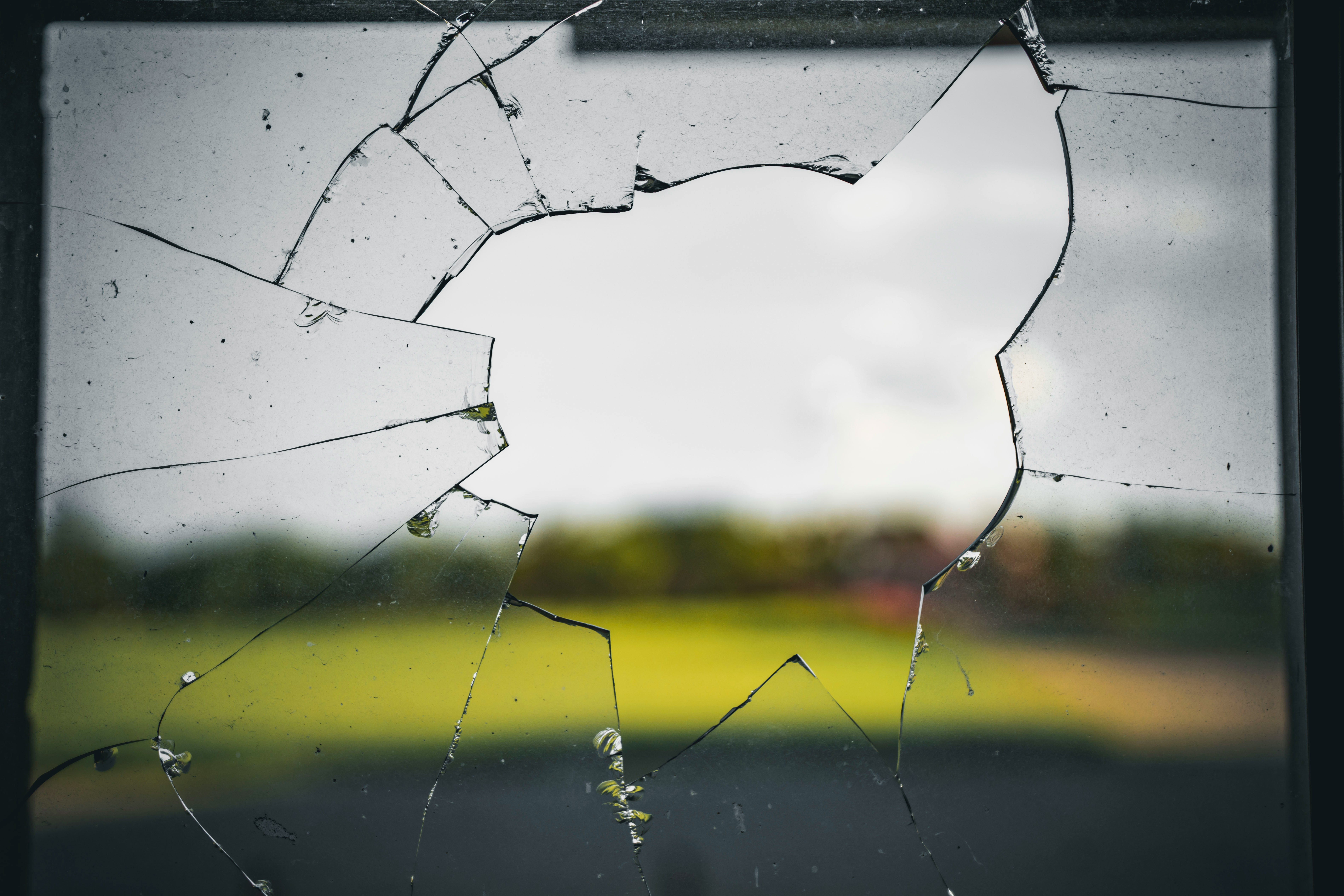
When I was growing up, my family lived on a cul de sac with four other families. For the kids in our cul de sac community, there was one house—The Taylors’ House—that was the star of the neighborhood.
They had the treehouse. And the giant trampoline. And the basketball hoop above their garage door. What more could you want?
After school, my brother and I played basketball there. (Well, my brother played and I tried). One day when I was probably about 10 years old, we were playing an epic game of HORSE.
He just had an “H” and I was way down the line with H-O-R-S…
I took my last shot… And not only did I miss, but the ball took a bounce, and then another… And it went right through the glass window pane on the garage door. (Why there were glass panes on a garage door, I will never know.)
My brother and I looked at each other and froze.
And then we grabbed the ball and ran home. We were outta there!
I told my parents what happened, and they said, “Well, you’re going to have to go over to The Taylors, tell them what you did and that it was an accident, and say you’re sorry.”
“What? Me? Can you go do it?”
Off I went, head hung low, down the driveway, around the corner, to knock on the front door, and tell The Taylors I broke their window.
We’ve all broken windows in one way or another. Not always literally, of course.
Christianity is very concerned with these broken windows: all the ways that we hurt and harm each other in this world, and the ways we get to and from those moments.
Most of the time, windows get broken on accident.
But other times, that basketball gets thrown on purpose.
We are window breakers.
All of this brokenness—even just that lingering feeling of walking around in a world of shattered glass—gets this special and confusing word called “sin.”
But we have a special balm for sin: the pathway of confession and forgiveness.
The word confession may conjure up images of sitting in a tiny booth with a priest and bearing your soul. That is one form of confession. Other traditions do that differently, often taking few moments to pray together to remind ourselves of our mistakes, our missteps, and really simply, our imperfectness.
We do all of this to acknowledge our humanness, rest in God’s boundless forgiveness, and take a new fresh step forward.
Confession is how we hold the truth of being window breakers.
Psalm 51 wrestles with this in a very deep, emotional way.
Have mercy on me, God, according to your faithful love!
Wipe away my wrongdoings according to your great compassion!
Wash me completely clean of my guilt;
purify me from my sin!
Because I know my wrongdoings,
my sin is always right in front of me.
I’ve sinned against you—you alone.
I’ve committed evil in your sight.
[…]
Let me hear joy and celebration again;
let the bones you crushed rejoice once more.
Hide your face from my sins;
wipe away all my guilty deeds!
Create a clean heart for me, God;
put a new, faithful spirit deep inside me!
Please don’t throw me out of your presence;
please don’t take your holy spirit away from me.
[…]
You don’t want sacrifices.
If I gave an entirely burned offering,
you wouldn’t be pleased.
A broken spirit is my sacrifice, God.
You won’t despise a heart, God, that is broken and crushed.
This Psalm is an invitation to consider our broken windows because this Psalm is born out of a devastating brokenness. The words themselves don’t tell us quite what happened. Traditionally, it is thought that this Psalm is a confession from King David after he committed murder, then assault, and then adultery. Others think that connection was made much later to take these words and describe how King David might have felt.
Whoever wrote this Psalm, they were coming face to face with themselves.
“I know what I have done.”
“I have sinned.”
“I have done evil.”
“Judge me.”
“Crush my bones.”
This writer feels terrible and is crying out to God, almost expecting or inviting God to turn away, like this was too much or the last straw. He thinks he’s a monster.
And yet as he cries out, he somehow also brings himself to say: “I confess. I am sorry. Please don’t leave. Let’s start again. Give me a new heart. Give me a new spirit.”
“I confess. I am sorry.” These are words we need to say, particularly in this moment with how entrenched we are in a world without sorry’s.
In our tribalism and defensiveness, sorry’s have seemed pretty hard to come by, when people refuse to admit they were wrong, and when people think apologies look like weakness. Meanwhile, more and more windows get broken in our world.
Earlier this year, some of our leaders were brought to Congress for questioning about how they’ve been handling the Epstein case. Behind the Attorney General sat dozens of victims whose lives had been devastated for many years by the horrible things that had happened to them and the justice that had been hidden from them.
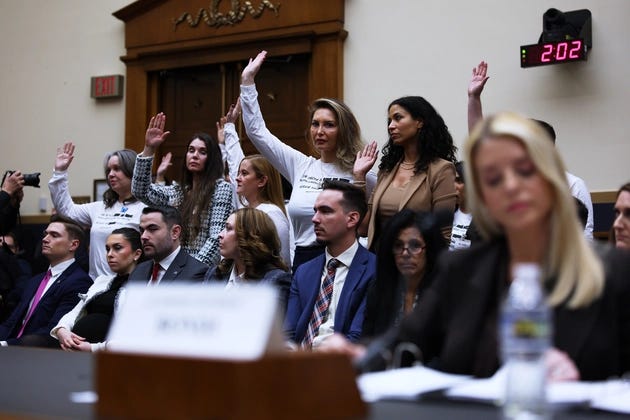
Over and over again, when given the invitation to apologize directly to the victims, our leaders refused.
As I thought about the women sitting there, I imagined the relief that would have washed over them after even just an attempt at a simple apology, knowing that finally they were seen and believed, and knowing that even if there was still so far to go, someone was on their side and felt their hurt.
Instead, there was refusal and more broken trust and yet another wall put up between people who hurt and people in power.
This is a world without sorry’s.
But there are other ways.
Bishop Desmond Tutu once said the three hardest words for a human being to say are “I am sorry.”
He continued: “But when we are willing to let down our defenses and look honestly at our actions, we find there is a great freedom in asking for forgiveness and great strength in admitting the wrong. It is how we are able to move forward into our future.”
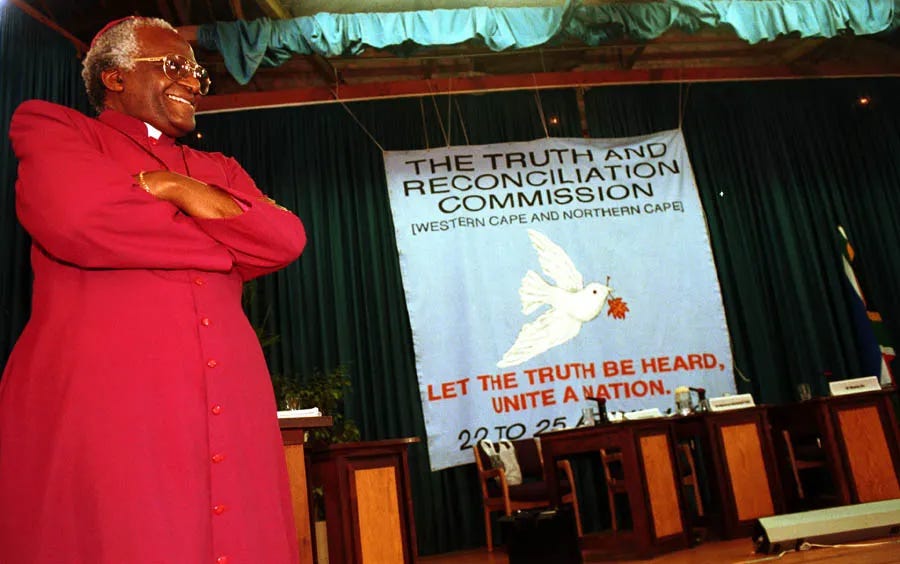
Bishop Tutu saw this first hand as he presided over one of the most beautiful moments in human history: The Truth and Reconciliation Commission that arose in the aftermath of apartheid in South Africa.
In the mid-90s after a horrific system of white supremacy was dismantled, this interfaith Commission investigated all of the human rights violations by the builders of apartheid. But they also offered amnesty and pardon to those who would come and confess what they had done in a space with the victims they had hurt.
People came to tell their stories, and more often than not, those who came to ask for pardon would turn to the victims or their families and say, “Please, we know it’s very difficult, but please, forgive me.” And almost always, the victims would.
Tutu tells the story of a young victim who had been blinded by police, who came to tell his story. When he finished, someone asked him, “How do you feel?” And he smiled and even though he was still blind, he said, “You’ve given me back my eyes.”
This is the path of new life our Psalmist invites us into.
It is a world where people know their pain is seen.
It is an honest and more truthful world.
And it is the only path to world of forgiveness.
Our Psalmist tells us that God wants nothing else. Nothing else will work! Not superficial sacrifices. Not rehearsed words. Not people who run away from the pain they cause. Instead, we are called to a broken heart.
God asks our hearts to break for one another, to name and know the pain we cause.
To ask ourselves:
Who have we hurt?
What have we broken?
How are we adding to the suffering in this world?
We do this not to beat ourselves up. But to come before a God who always forgives us—we never have to beg—and to risk being transformed by practicing an honesty and a grace that we can then offer to each other. Only then, do we and this world begin to change and grow closer together.
Our broken windows need to lead to a broken heart.
I remember taking that walk to my neighbor’s house. I got to door and said, “Hi, it’s Sam from next door. I just wanted you to know that I accidentally broke one of your garage windows with my basketball. I’m so sorry.”
They were very understanding and told me there was nothing to worry about and they’d take care of it. I was very grateful.
I remember the next day I walked by the garage and saw that they’d already fixed the window. Well, not quite. They took the few pieces of glass and taped them all together and put it back into the garage door.

It was a temporary fix. It was still broken, but it was good enough.
This practice of confession and this pathway of forgiveness and reconciliation does not erase the brokenness of the world. It doesn’t make it perfect.
That’s God’s job, somehow, someway, sometime.
But this is how we mend this world and put the pieces—and us—back together.
It begins by softening our hearts, being gentle with ourselves, acknowledging what we’ve done. But also knowing and trusting that we do so with a God who will never ever turn away from us, no matter what we’ve done.
Bishop Tutu reminds us of this:
“No one is born in any less glory or goodness than you or me. But on any given day, in any given situation, in any painful life experience, this glory and goodness can be forgotten, obscured or lost. We can easily be hurt and broken, and it is good to remember that we can just as easily be the ones who have done the hurting and the breaking. But at the center of this existence is a heart beating with love. You and I, as a matter of fact, are made for goodness.”
This is the grace we practice.
This is the grace we share in a broken world.
Amen.
Thanks Pastor Sam for this child hood story, reflection on Psalm 51, and the wisdom of Archbishop Desmond Tutu...
What a wonderful sermon.