
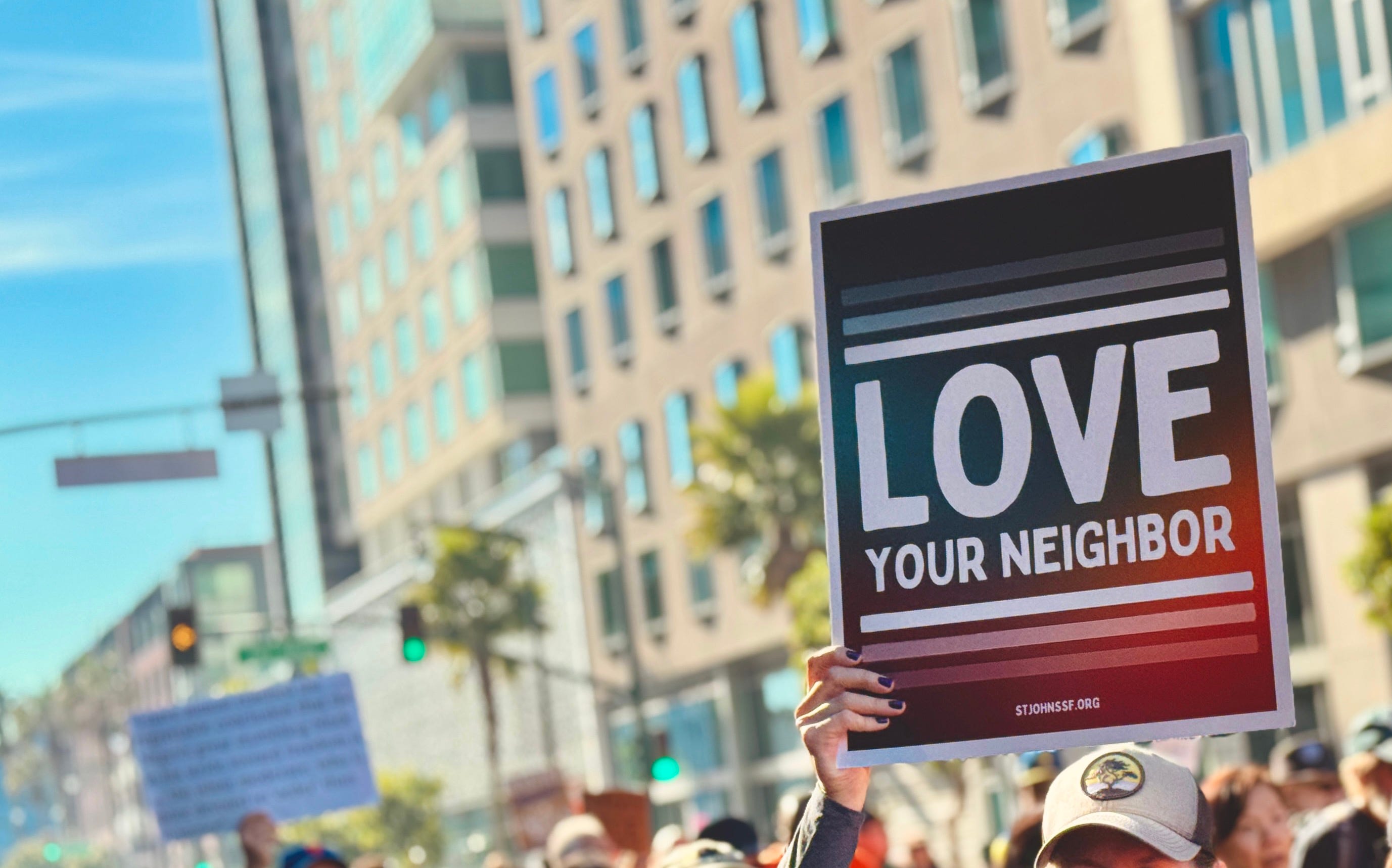
Growing up, our neighbor Charlie lived next to us on this little cul-de-sac. And I’ll just get right to it: we were scared of Charlie.
If our neighborhood was like a Saturday morning cartoon, every house in the neighborhood would have a beautiful blue sky over it, except Charlie’s. His house would be the one with storm clouds and lightning and thunder.
That’s how it felt anyway. Kind of like “Old Man Marley” from Home Alone. We were terrified.
Now, Charlie didn’t actually live in his house. He lived in an RV in the driveway (to this day, we are not quite sure why), and he was in and out of that RV all the time. I remember the sound of that screen door as it swung open and closed and his loud TV blaring. Anytime he came out, he always had a grumpy scowl on his face, and he yelled at me and my brother when were out in the yard playing or on our bikes.
And it wasn’t even just him. He had these big, mean dogs that barked and barked and barked at just about everything.
Charlie was a hard neighbor to love. He didn’t seem to love us either, so we kept our distance and tried not to bother him. But yes, he was a tough neighbor to love.
And yet as Christians, that is our greatest commandment: “Love your neighbor.”
Three words with a LOT packed into them:
Who is my neighbor?
What does it mean to love them?
How do I do that?
What if I don’t feel like it?
These words are probably not new to you. They’re one of the big “slogans” of the Christian faith. (After all, St. John’s just had them printed on protest signs.)
And when Jesus spoke them—
“You must love the Lord your God with all your heart, with all your being, and with all your mind. This is the first and greatest commandment. And the second is like it: You must love your neighbor as you love yourself. All the Law and the Prophets depend on these two commands.”
—they were not new to those who were listening either. Jesus is pulling from the Jewish scriptures, words that the people would know.
But he’s taking these commandments from a pile 613 other commandments—the total number of Jewish laws—and he’s saying that “Love your neighbor” and “Love your god with all your heart, being, and mind” are the most important and the other 611 depend on these.
That might hit you as pretty obvious: “Of course, it’s all about love. What else would it be about?”
Sure. But there are certainly other ways to treat our neighbors.
This passage comes out of a time when a lot of upheaval was gripping this region, primarily its occupation by the Roman Empire.
Expansion was one of the empire’s animating forces, which meant that they treated neighbors entirely differently. They conquered territories, claimed resources, and destroyed those who were in the way of getting what they needed or just wanted.
This is one way to treat a neighbor: as an obstacle, as an enemy.
We certainly do have the option of seeing those around us through the lens of “I want” and “I control” and even “I’m afraid.” We can look at someone and think, “You are in my way.”
That’s one way to treat a neighbor. It was (and is) the imperial way.
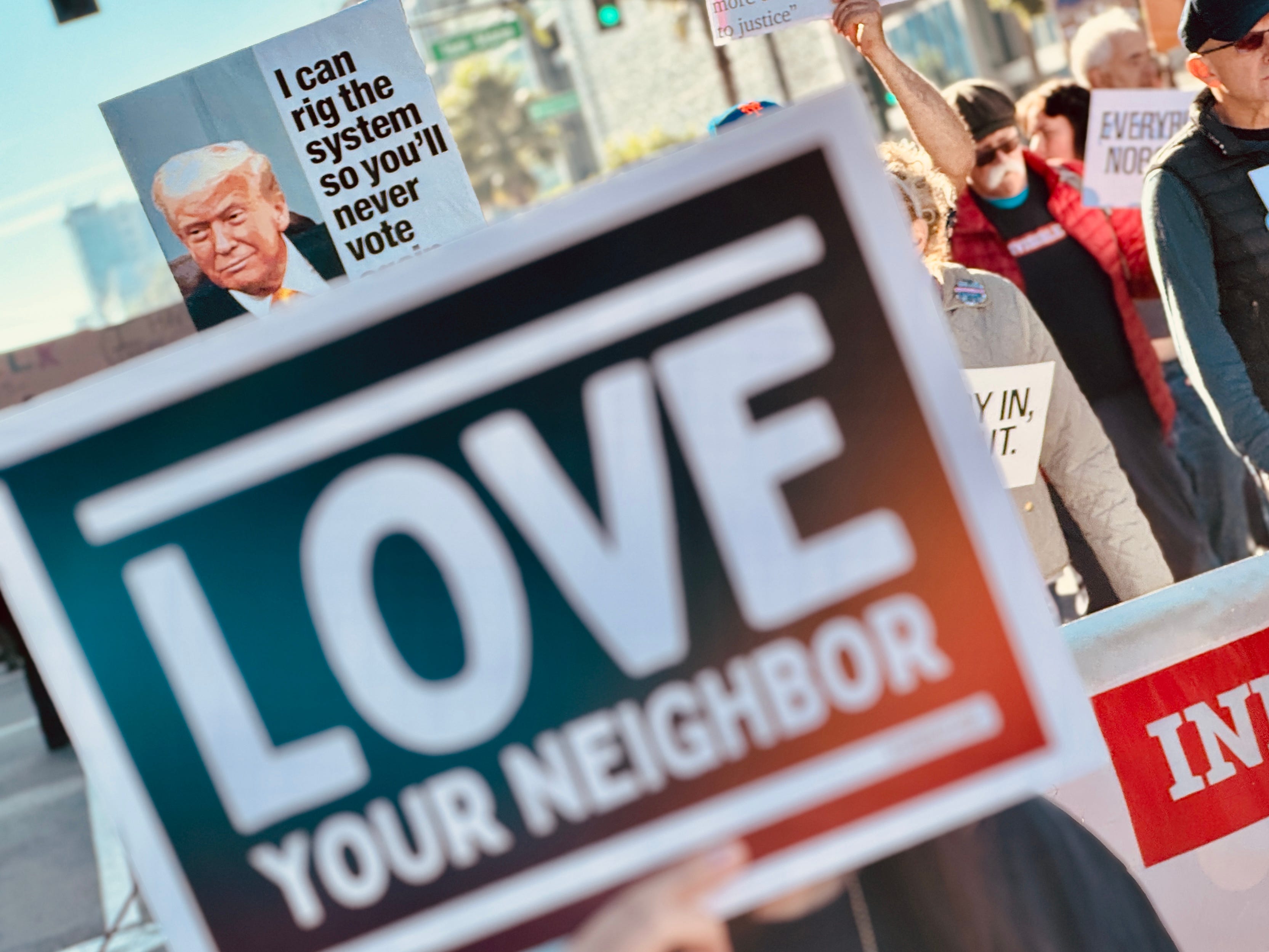
This week, we heard startling words from our leaders: “A whole civilization will die tonight, never to be brought back again.” And then, we even had a strange, disaster movie, countdown clock hanging over us as were left wondering and worrying about what might happen.
All of that comes from a certain way of looking at a neighbor.
The language and the energy of empire needs to consume and expand and threaten and take. It sees 93 million Iranian neighbors and their lives and hopes as “in our way.”
This is the same language and energy that Jesus speaks into and proclaims a different way: “Love your neighbor.” When there are looming and even normalized other ways of treating one another, he elevates this to the center of life. He reminds us that everything God calls us to do hangs from the branches of this single calling.
By doing that, he puts something between us and another person—a moment of pause to ask as we see the face of another person: “What does it look like to love this person right now?”
We know that there were not instant results for this commandment.
As we sit in the aftermath of the Easter story, we see that things didn’t quite unfold with a lot of neighborly love. Quite the opposite.
We can imagine those who heard Jesus preaching “Love Your Neighbor” turning around to see neighbors turning on him during his final days.
“Jesus, you want me to love them?
After what they’ve done?
These people?
Really?”
Really. If we are to take Jesus at his word, “Love Your Neighbor” is at the center of all that we do. And yes, this is hard to do.
It is hard to do when we see what people have done.
It is hard to do when we feel threatened by others.
It is hard to do when we’ve got our own stuff to worry about.
It is hard to do when we stand face to face with people who are different from us.
It is hard to do.
That brings me back to my neighbor, Charlie.
Like I said, he was a hard neighbor to love, but there was one person who discovered that it was very easy: my sister.
We moved into that neighborhood just as my sister was born. As the years went by, she grew up and somehow saw past the grumpy face and big scary dogs and eventually toddled her way over to Charlie’s. And it turned out she loved his big scary dogs.
And that little connection, that tiny similarity, was enough for him to fall in love with her. Every year, Charlie would get her a little birthday present. (My brother and I never got anything.) But on her birthday, she would get a kids set of National Geographic magazines (because he knew she loved animals) and even a little ballerina music box that my sister still has to this day.
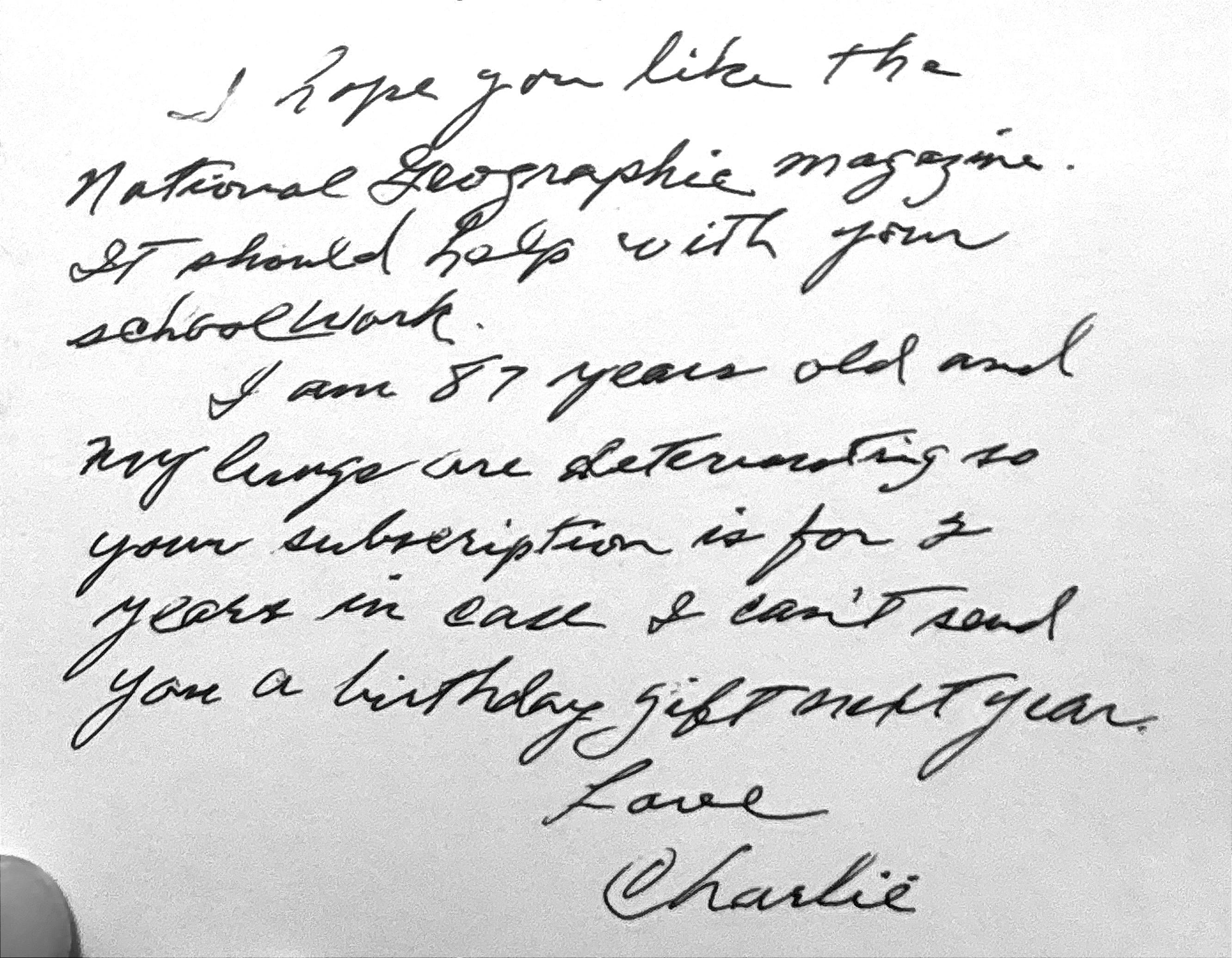
Charlie loved her. And she would run over there all the time and knock on that RV screen door and hang out with Charlie. All because they saw something similar in each other. It opened up his heart, and it opened up all of ours, too.
As the years went on, Charlie warmed up to all of us, and we warmed up to him. He even invited us over one day to his backyard, where it turned out instead of a scary lightning storm, he had this incredible grove of every berry you could dream of. He tended to it every day. And he let us pick whatever we wanted.
Charlie was a hard neighbor to love. But in time, we did.
One of the things I love about the story of Christianity is how we see so many different kinds of people smashed together into one story. It helps us see ourselves—all the different and difficult parts of ourselves—somehow fitting together into one big puzzle.
One story, one family, one neighborhood.
Jesus does this, too. He often does it physically—touching people that no one would touch, eating with “unclean” people. He sees us all as one human family.
It’s important for us to get that reminder again and again. Because so often, our emotions and judgements and desires and moods, get in the way, and we forget to take that pause. We forget the bigger picture.
This week, in the midst of the crazy things happening, something really cool happened, too. We got to see the big picture again when the Artemis moon orbit mission traveled further away from Earth than any human beings ever have before. For the first time in 50 years, astronauts saw the big picture again with their own eyes. They got to zoom out on everything for God’s-eye view.
Here’s what Astronaut Christina Koch had to say about her experience seeing our planet:
“The thing that changed for me, looking back at Earth, was that I found myself noticing not only the beauty of the Earth, but how much blackness there was around it and how it just made it even more special. It truly emphasized how alike we are, how the same thing keeps every single person on planet Earth alive. We evolved on the same planet, and we have some shared things about how we love and live that are just universal. And the specialness and preciousness of that really is emphasized when you notice how much else there is around it.”

Over and over again, scripture reminds us that this whole planet is our neighborhood, and everyone here is our neighbor. Each person in our neighborhood is just trying to make it through this wild and crazy life with as much joy and peace as they can. And most important of all, everyone here—no matter what they look like, what they’ve done, what mistakes they’ve made—they deserve love and deserve to know that they’re loved.
Our life, our calling is to make that happen—in our own way, as best we can.
It takes a lot of practice. But that’s all we are called to do: to look in each other’s eyes, through what may be vast differences, and know that each of us is beloved.
That is the greatest commandment.
yes...